
E-letter No. 276: June 2026
Dear Friends,
We hope you are safe and well. Thank you for staying connected with LYWA and for subscribing to our monthly e-letter.
We were truly grateful for your generous support during Saka Dawa. With this wonderful community's support, we will continue to share and preserve the Dharma wisdom of Lama Yeshe and Lama Zopa Rinpoche with you and the rest of the world. Thank you!
In this issue, we feature a talk from our video archive by Lama Zopa Rinpoche on the profound power of stupas. Our monthly podcast presents a teaching by Rinpoche on recognizing the extraordinary advantages of our human body and rebirth. We're also happy to share four new teachings by Lama Yeshe, excerpted from Big Love, along with a new teaching and advice from Lama Zopa Rinpoche. In addition, we have updates to share on our websites, so keep reading!
From the Video Archive: The Special Power of the Stupa
This month from the video archive: during the grand opening of the Kadampa Center’s new location in Raleigh, North Carolina, in 2008, Lama Zopa Rinpoche responded to the center’s plan to build a stupa by discussing the special attributes and profound power of stupas, while offering classic stories and examples of this power.
Visit and subscribe to the LYWA YouTube channel to explore our complete video collection of teachings by Lama Yeshe and many from Lama Zopa Rinpoche, available from our archive. For many more videos of Lama Zopa Rinpoche's teachings, visit the FPMT YouTube channel.
On the LYWA Podcast: Help Yourself and Liberate the World
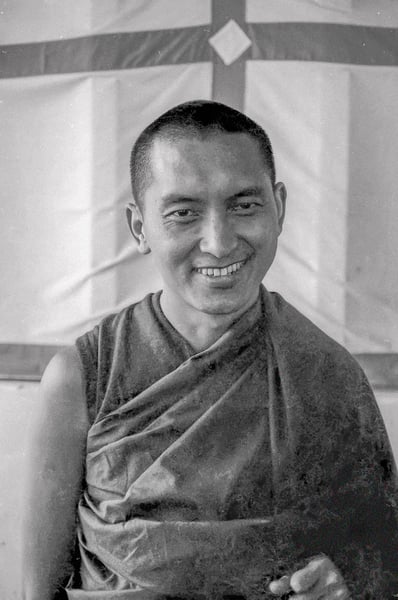
It's unbelievable what you can accomplish with this incredible human body. There is no greater joy than this.
—Lama Zopa Rinpoche
This month on the Lama Yeshe Wisdom Archive podcast, Lama Zopa Rinpoche encourages us to take advantage of the awesome power of our human rebirth. Rinpoche gave these teachings during a commentary on the Eight Verses of Thought Transformation, an essential mind training (lojong) text composed by Kadampa Geshe Langri Tangpa, at Tse Chen Ling Center in San Francisco, California, USA, in November 2003. You can read along with the transcript on our website.
The LYWA podcast contains hundreds of hours of audio, each with links to the accompanying lightly edited transcripts. See the LYWA podcast page to search or browse the entire collection by topic or date, and for easy instructions on subscribing.
What’s New on the LYWA Website

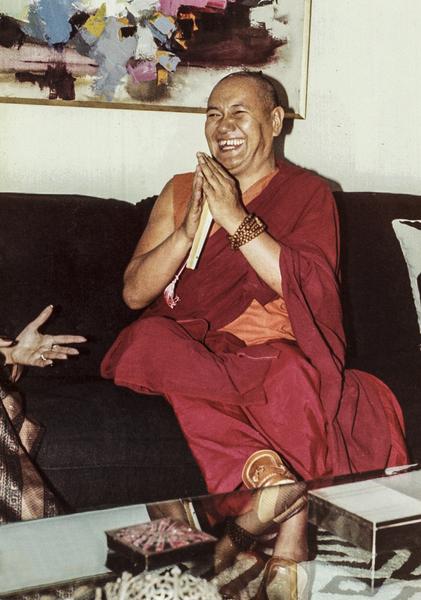
This month, we’re pleased to share four new teachings from Lama Yeshe, excerpted from Big Love: The Life and Teachings of Lama Yeshe.
In our first excerpt, Taking Refuge in Ultimate Wisdom, Lama Yeshe introduces refuge and explains how it brings a warm feeling to our hearts and a continuous wish to grow and develop. In the second teaching, Skillful Methods of Mother Tara, Lama Yeshe explains how to transform consciousness to recognize Mother Tara’s body, divine speech, and her nondual wisdom.
In our third excerpt, Discovering Bliss, Lama Yeshe describes one of the fundamental realizations in Buddhist tantra. In the final teaching excerpt posted this month, The Dualistic Mind, also featured below as our monthly teaching, Lama Yeshe advises that restlessness, frustration and dissatisfaction come from one root: the dualistic mind perceiving dualistic vision.
Visit our Big Love Teaching Excerpts webpage, where you’ll find a growing selection of teachings featured in the book. The teachings are organized by chapters, with easy navigation links. Be sure to check back often, as we’re adding new content every month!
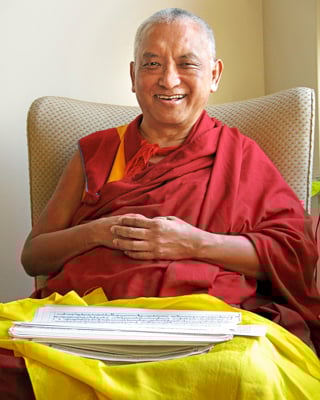
We've also posted a new teaching by Lama Zopa Rinpoche, Finding Happiness Without Going Anywhere. Rinpoche explains that when we shift our motivation from "How can I be happy?" to "My life's purpose is to benefit others," our experience changes and life feels more meaningful. This teaching was given at the Aryatara Institute in Munich, Germany, in November 2018. Visit FPMT’s Rinpoche Available Now (RAN) for more teachings, transcripts, audio recordings and videos from this event. You can find the video for this teaching on the FPMT YouTube Channel.
Don't miss the new entries we’ve added this month to Lama Zopa Rinpoche’s Online Advice Book. With more than 100 new pieces of advice published each year, the collection has now grown to over 2,600 entries on our website.
- Cancer Is Nothing New: Rinpoche gave this short talk to a group of women who were newly diagnosed, recovering from or coping with the effects of cancer or other chronic illnesses.
- Three Mantras for a New Student: Rinpoche recommended these mantras for a new student, together with the motivation and dedication prayers.
- The Basis of Tantric Practice: In response to a student's question about a Highest Yoga Tantra initiation, Rinpoche emphasized the three principal aspects of the path and recommended the Middle-Length Lamrim as the main text for their study and practice.
You can always find a list of all the newly posted advices from Lama Zopa Rinpoche on our website.
Supporting Your Practice: Digital Dharma Portals
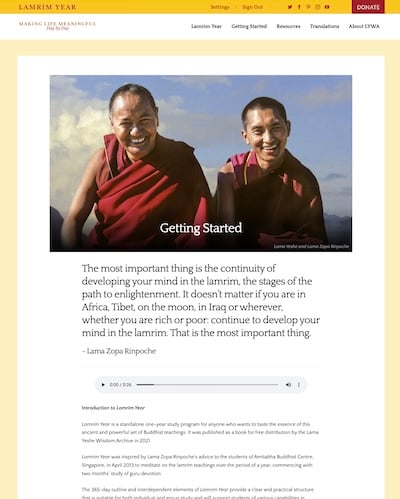
Many of you may already know that, in addition to our popular LYWA site, we maintain two auxiliary websites: the Lamrim Year Companion site and Teachings from Tibet.
The Lamrim Year Companion site makes it easy for people to engage with the daily meditations in Lamrim Year. Each meditation is available in both text and audio and can be accessed wherever you are, whether on a desktop computer or a mobile device. At the completion of each lamrim topic, you can post a reflection on your journey through the topic and read reflections from others.
Here is an inspiring reflection by a practitioner after completing the topic on impermanence and death:
"I love this teaching and that my family is becoming more used to it in our day-to-day lives. Death was always a taboo and hushed subject as I grew up. My parents shut the mention of it down immediately. But to speak openly and meditate on death is not morose or depressing; it’s liberating, even hopeful, joyful. I’d rather have the Dharma lessons on death than the mysterious unknown that I had years ago. Every night I lay my head on the pillow and smile in the joy and comfort of my refuge in the Three Jewels, and it’s my first thought on waking. So wonderful.” —Gabrielle Streater
Sign up today if you’d like an easy way to begin a daily lamrim practice, along with the support of an online community. You won’t be disappointed!
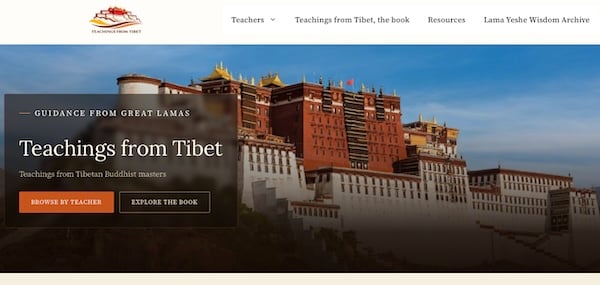
Please go and check out our newly upgraded Teachings from Tibet site. Thanks to the help and support of Ven. Thubten Zoksang, a generous volunteer, we were able to make some important updates and give it a needed makeover! This site was inspired by many of the teaching transcripts we’ve received over the years from great Tibetan lamas and by our popular publication Teachings from Tibet.
Thanks so much for your continued support during Saka Dawa and for your ongoing support of our Legacy campaign. LYWA is a community-driven project, and we’re deeply grateful to have your support as part of this shared effort.
Big love,

Nick Ribush, Director, and the LYWA team
The Monthly Teaching: The Dualistic Mind
The entire subject matter of this work is included within these two terms dharma and dharmata: relative and absolute phenomena. In this work, the term dharma also means samsaric phenomena while dharmata signifies the phenomena of liberation, or nirvana. So in this context, what exactly is “dharma”? It is the dualistic mind. This is the superstitious mind that perceives a dualistic vision. As such, it is the cause of the uncontrolled, agitated life. And from this cause of the agitated life come uncontrollable sickness, uncontrollable death, uncontrollable rebirth and all other forms of uncontrollable confusion. All these samsaric phenomena come from one root: the dualistic mind perceiving the dualistic vision, what we may call namtog, or superstition. This is something we have to understand.
This work by Maitreya explains that the dualistic mind is always involved in some form of competition. This is a major characteristic of modern life, isn’t it? When we consider the Western way of life, and particularly American culture, everywhere we look we see competition; there is always some kind of contest going on. Take a simple example: the man next door buys himself an expensive car and, as soon as we see it, jealousy begins to arise in our mind. “He has such a good car, so big and comfortable. Where does that leave me? I’ll have to do something about that. I’ll get myself an even bigger car ....” As far as material progress is concerned, such a competitive spirit is good, but as far as our mind is concerned, it is not good at all. Why not? Because it only makes us more agitated and conflicted; this is the symptom of the dualistic mind. We call it dualistic because as soon as one thing appears to our mind we look around for something else to compare it with. That shows our dissatisfaction, the way in which we are always searching for something newer, something better, something else. This is the way our dualistic mind is; this is how it works.
This syndrome of the dualistic mind is true for everyone. It doesn’t matter whether you are a religious person or a non-religious person, Buddha’s teaching describes the way things are. This is not a religious trip we are talking about; it is not Buddha’s trip or some lama’s trip. Whether you are religious or non-religious, intelligent or dull, as long as you have a dualistic mind, conflict is always arising. Sometimes it appears on a gross, emotional level; sometimes it works on a subtle, unconscious level. But as long as there is the dualistic mind, there is some form of contradiction and conflict going on.
The dualistic mind is functioning within you right now, and if you just take a look it is easy to understand and experience how this mind is playing games with your life, games that only lead to misery. You can see just how this mind leads to restlessness, frustration and dissatisfaction. And when you release that dualistic mind, you are a buddha, or whatever you want to call that state of complete freedom. At that point you can call yourself a liberated lady or a liberated gentleman if you want to; it doesn’t matter. In short, the cessation of the dualistic mind is liberation, the experience of ultimate reality.
Lama Yeshe gave this teaching in Madison, Wisconsin, in 1977. Published in Chapter 15 of Big Love: The Life and Teachings of Lama Yeshe and on our website.