| This article first appeared in Teachings from Tushita, the Journal of Tushita Mahayana Meditation Centre, in 1981. Born and educated in England, Jeremy Russell’s interest in Buddhism was initially sparked during his first visit to Dharamsala in the early 1970s. He subsequently studied at the Library of Tibetan Works & Archives for several years. He has lived in Dharamsala with his family since 1981, dividing his time between working as an editor for several offices of the Tibetan government-in-exile and leading trekking groups into the nearby mountains. He is editor of Chö-Yang, the Journal of Tibetan Culture. This publication has been translated into Spanish by Ediciones Mahayana, and is now available for download as a pdf file. |
The Eight Places of Buddhist Pilgrimage
Lord Buddha said:
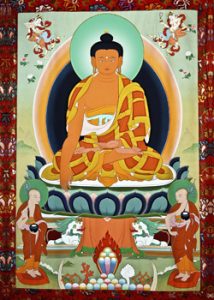
Monks, after my passing away, if all the sons and daughters of good family and the faithful, so long as they live, go to the four holy places, they should go and remember: here at Lumbini the enlightened one was born; here at Bodhgaya he attained enlightenment; here at Sarnath he turned twelve wheels of Dharma; and here at Kushinagar he entered parinirvana.
Monks, after my passing away there will be activities such as circumambulation of these places and prostration to them.
Thus it should be told, for they who have faith in my deeds and awareness of their own will travel to higher states.
After my passing away, the new monks who come and ask of the doctrine should be told of these four places and advised that a pilgrimage to them will help purify their previously accumulated negative karmas, even the five heinous actions.
CHAPTERS
The Eight Places of Buddhist Pilgrimage
Introduction
Lumbini—birthplace of the Buddha
Bodhgaya—site of Buddha's enlightenment
Sarnath—first turning of the Wheel of Dharma
Rajgir—second turning of the Wheel of Dharma
Shravasti—teachings in the Jetavana Grove
Sankashya—where Lord Buddha descended from Tushita Heaven
Nalanda—site of the great monastic university
Kushinagar—where Buddha entered mahaparinirvana
Conclusion and Books Consulted